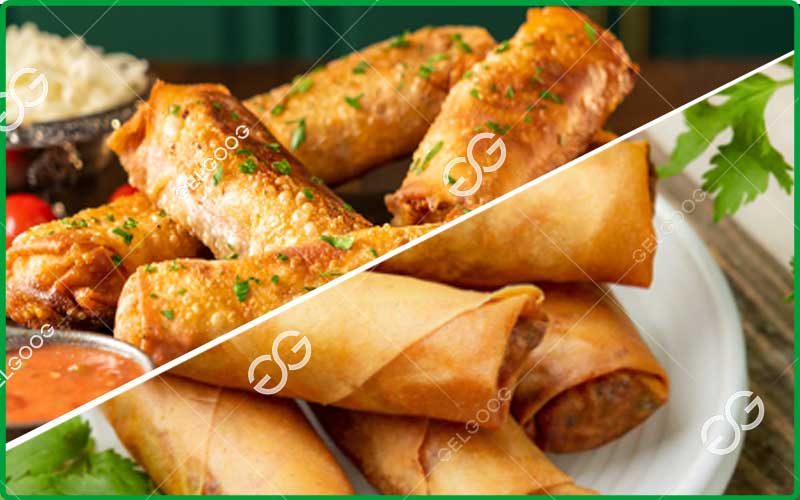
What's the Difference Between Egg Roll and Spring Roll?
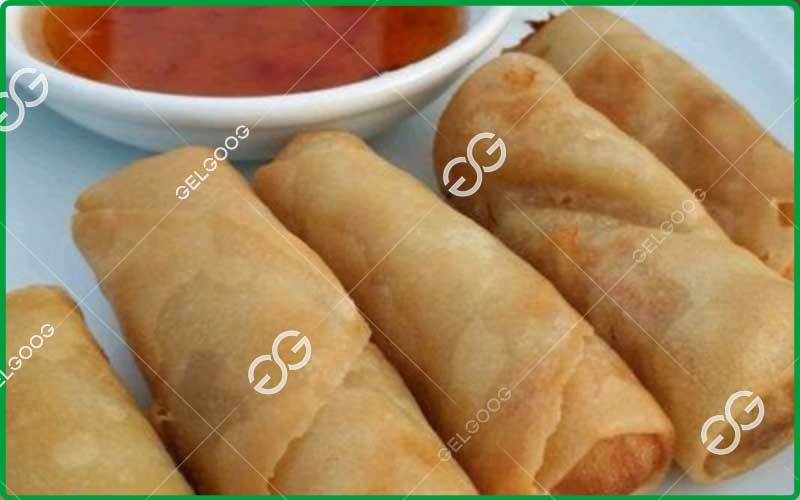
What's the difference between egg roll and spring roll? With the growing demand for pre-packaged food, spring rolls and egg rolls have become popular categories in the international catering market.
This article will analyze the core differences between the two and provide professional advice for industrial production line design, helping companies to accurately match equipment and improve production capacity and quality.
Raw Material Differences: From Formula to Production Line Adaptability
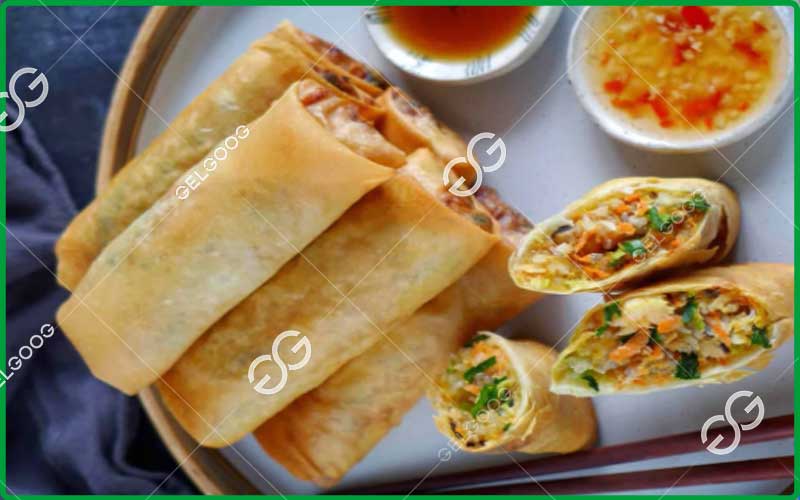
Raw Material Characteristics of Spring Rolls
- Crust: Traditional spring rolls use rice paper or thin wheat flour skin, which needs to be processed in a low temperature and high humidity environment to prevent cracking.
- Fillings: mainly light ingredients such as vegetables, vermicelli, shrimp, etc., with high water content, and strict requirements on the sealing of the forming equipment.
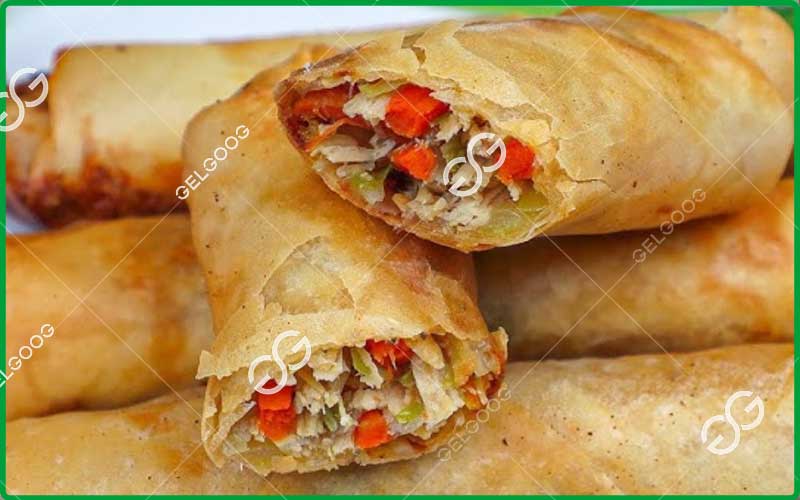
Raw Material Characteristics of Egg Rolls
- Crust: Flour skin with added eggs, thicker texture and requires high temperature frying to set, and the production line needs to be equipped with a precise temperature control system.
- Fillings: Mostly heavy-tasting ingredients such as minced meat and beans, which require integrated mincing and seasoning equipment to improve mixing uniformity.
Key Points of Industrial Adaptation
- Raw material pretreatment equipment: The spring roll production line needs to add a moisturizing module, and the egg roll line needs to strengthen the dough mixing and rolling system.
- Compatibility design: Modular equipment can quickly switch recipes to meet the production needs of multiple categories.
Production Process Comparison: Differentiated Configuration of Automated Equipment
1. Spring roll forming process
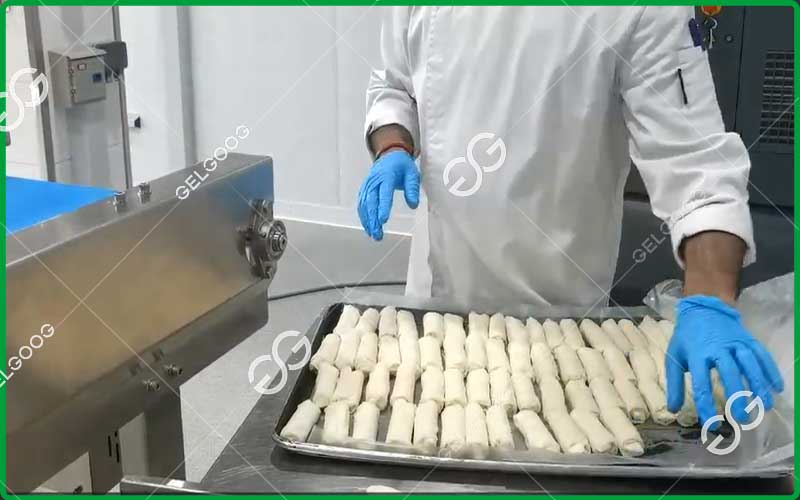
- Rolling stage: The filling needs to be wrapped quickly (usually within 5 seconds) to avoid brittleness due to exposure to air. Industrial-grade rolling machines need to be equipped with humidity sensors and high-speed robotic arms.
- Maturation method: Most spring rolls are sold in non-fried forms (such as cold or steamed), requiring cold chain packaging lines or steam cabinet integrated equipment.
2. Egg roll forming process
- Frying and shaping: Egg rolls need to be fried in oil at 180-200℃ for 2-3 minutes, and the production line needs to be equipped with a segmented temperature-controlled frying tank and an automatic oil draining system.
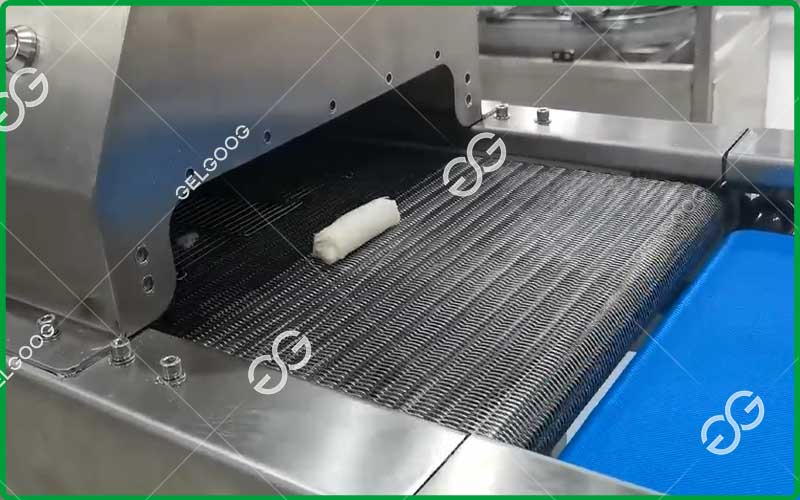
- Cooling and packaging: High-temperature finished products need to be quickly cooled to room temperature to avoid softening of the outer skin. It is recommended to use air-cooled tunnels and nitrogen fresh-locking packaging machines.
Equipment Selection Suggestions for Industrial Production Lines
1. Special equipment for spring rolls
- Core equipment: vacuum filling filler, ultrasonic edge sealing system.
- Advantages: Reduce breakage rate (can be controlled below 0.5%), adapt to the trend of healthy food.
2. Special equipment for egg rolls
- Core equipment: automatic batter sprayer, double spiral filling mixing tank, closed-loop temperature-controlled frying line.
- Advantages: Improve flavor consistency and support large-scale continuous production (single-line daily production capacity can reach 10 tons).
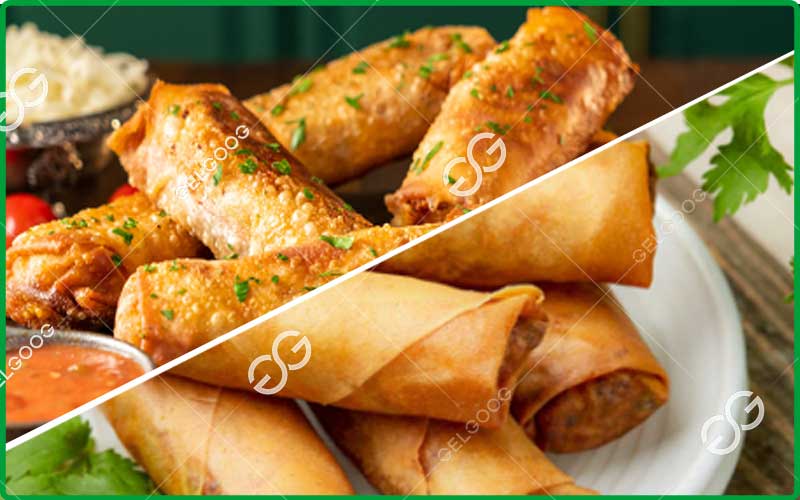
Although spring rolls and egg rolls look similar, their raw material characteristics and process differences put forward completely different requirements for industrial production lines. Choosing equipment with strong adaptability and high degree of automation can not only improve production efficiency, but also help companies flexibly respond to changes in market demand.
Contact us now to get customized spring roll/egg roll production line solutions to inject efficient kinetic energy into your food processing business!
Leave a Reply