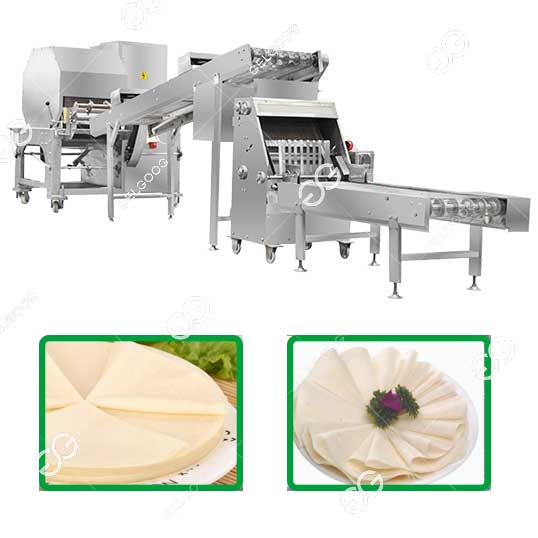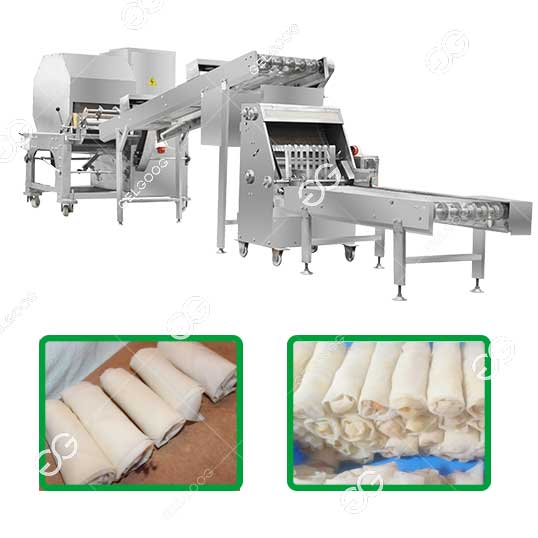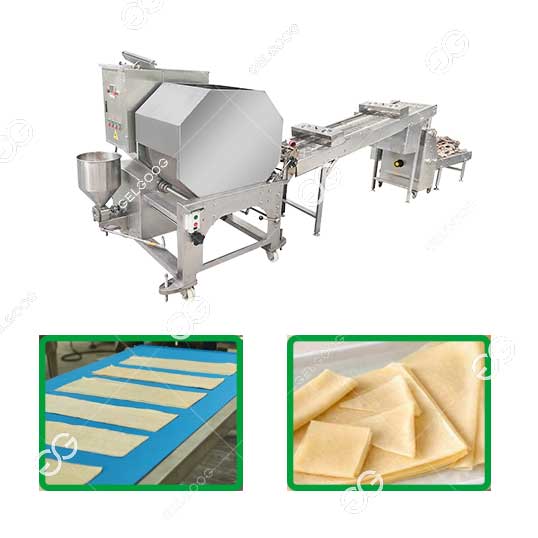
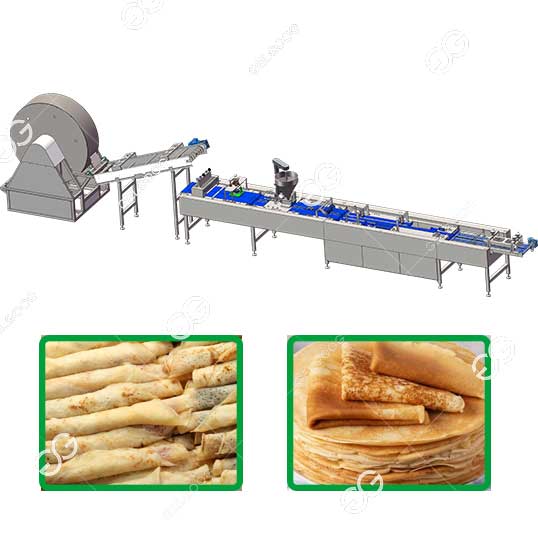
A Palacsinta Machine is an automated system for continuously producing thin, uniform Hungarian pancakes. Depending on configuration, it automates batter feeding, spreading, baking, cutting, conveying, cooling, and stacking.
Palacsinta is a thin pancake similar to a crepe, widely associated with Hungarian and Central European cuisine. Commercial producers use automatic machines to achieve consistent thickness, shape, baking quality, and speed. Modern equipment can also produce crepes, spring roll wrappers, and similar thin skins.
Suitable for food factories, central kitchens, bakeries, restaurants, and foodservice – offering a practical way to standardize production and reduce manual labor.
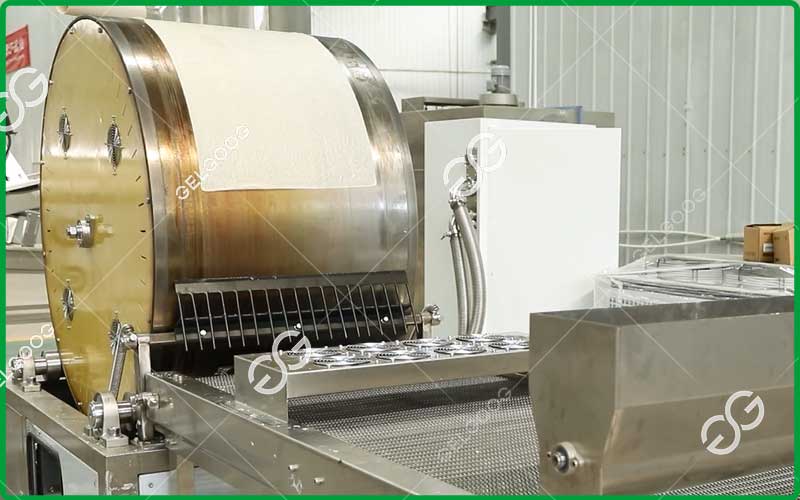
A Palacsinta Machine is a specialized pancake production machine that converts prepared batter into thin, evenly baked Palacsinta sheets.
It typically uses a heated baking wheel or forming surface: batter is dosed onto the hot surface, spread into a thin layer, and baked continuously, then automatically peeled, conveyed, and collected.
Depending on configuration, the process can include:
Batter preparation and feeding
Automatic dosing
Spreading
Continuous heating and baking
Automatic peeling
Cutting/sizing
Conveying
Cooling
Stacking
This continuous process ensures stable, repeatable thickness and dimensions.
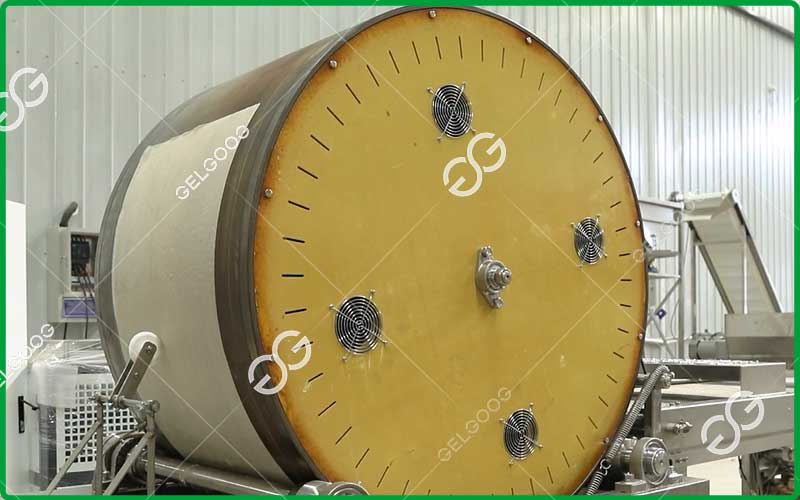
An automatic Palacsinta machine suits businesses needing higher, more consistent output than manual cooking.
Modern automatic pancake machines integrate batter feeding, baking, cutting, conveying, and stacking into one system. Industrial models can produce hundreds to thousands of pieces per hour, depending on model, pancake size, thickness, batter formula, and operating parameters.
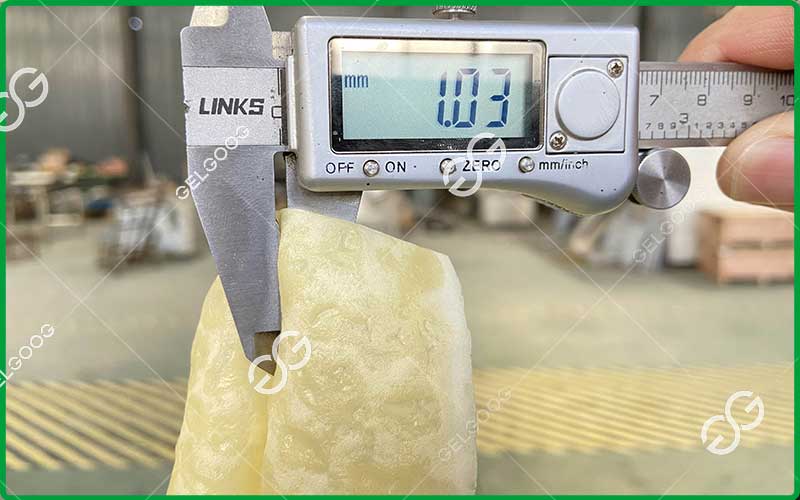
For example, industrial crepe and pancake equipment typically offers adjustable thickness and continuous production. One current model range lists approximately 0.3–2.0 mm thickness adjustment and capacities of 1,000–7,000 pieces per hour, depending on the model.
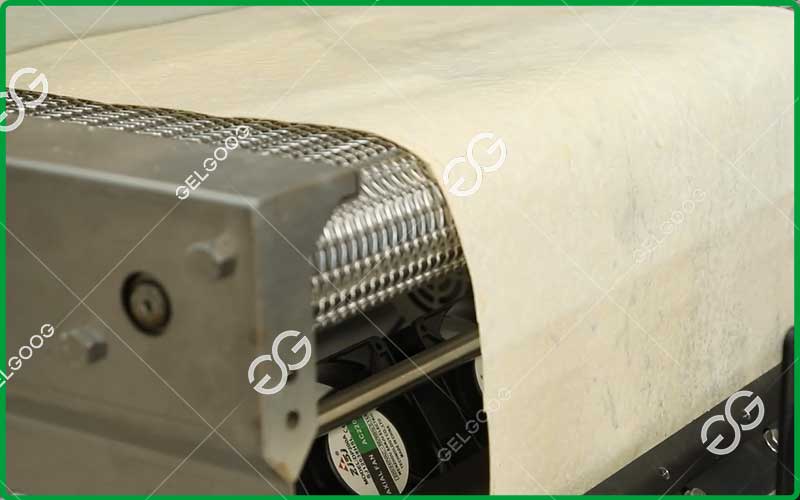
A Hungarian pancake machine is designed around the characteristics of traditional Palacsinta: a thin, flexible pancake that can be served with sweet or savory fillings.
Palacsinta can be used for:
Commercial Palacsinta production often requires stable thickness and uniform baking because these factors influence rolling, folding, filling, packaging, and final presentation.
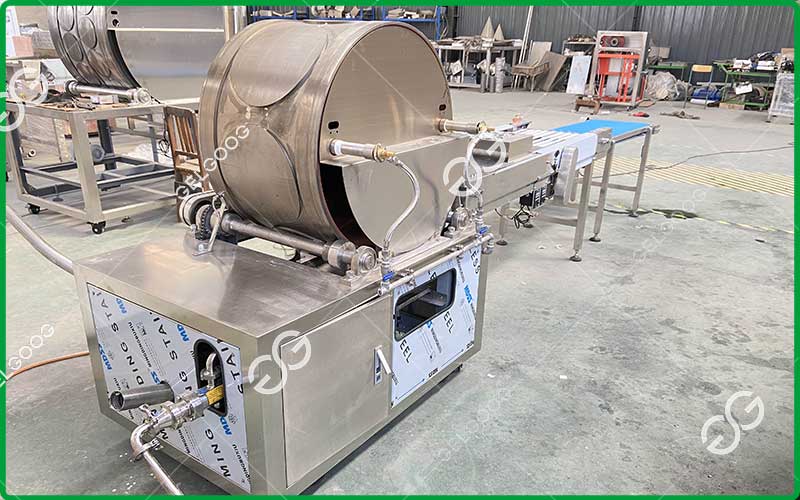
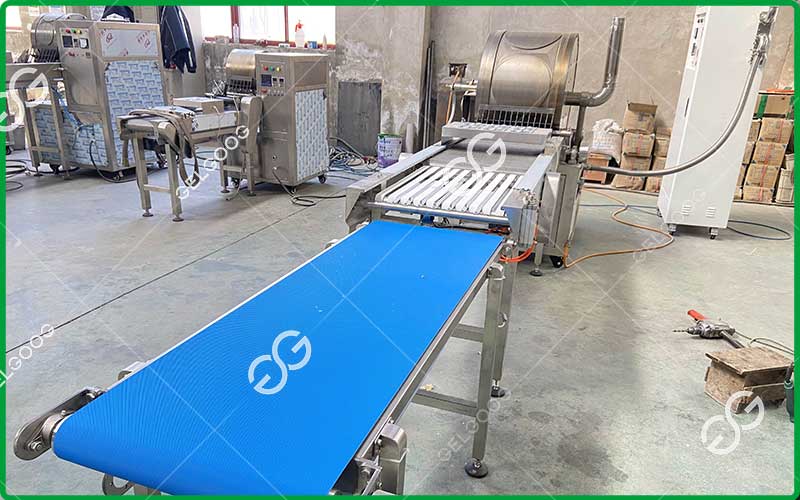
Exact configuration depends on output and product specs, but an industrial Palacsinta machine can include:
What is a Palacsinta Machine?
An automatic food processing machine for continuously producing thin Hungarian pancakes. It can automate batter feeding, baking, peeling, conveying, cutting, cooling, and stacking, depending on configuration.
Can an automatic Palacsinta machine make crepes?
Yes – depending on configuration and batter formulation, it can produce Palacsinta, crepes, spring roll wrappers, and other thin pancake-style products.
What thickness can it produce?
Depends on model and system. Some industrial machines offer adjustable thickness of approximately 0.3–2.0 mm.
Is it suitable for a food factory?
Yes – industrial models are built for continuous production and can be configured for higher capacities with automatic conveying, cutting, cooling, and stacking.
Can it produce other wrapper products?
Yes – with suitable batter and configuration, it can also make spring roll wrappers, crepes, duck pancakes, and other thin sheets.
We offer automatic Palacsinta machines configurable to your product size, thickness, capacity, heating method, and automation level.
For large-scale production, a complete system integrates batter feeding, continuous baking, peeling, cutting, conveying, cooling, and stacking.
Contact GELGOOG to discuss your requirements and select the right configuration.
Manual production requires repeated batter dosing, spreading, baking, peeling, and handling — making consistent thickness and baking conditions harder to maintain as volume increases. An automatic machine standardizes these operations.
| Feature | Manual | Automatic |
|---|---|---|
| Batter feeding | Manual | Automatic |
| Thickness | Operator-dependent | Adjustable |
| Baking | Manual control | Controlled process |
| Product size | Variable | Consistent |
| Production flow | Batch | Continuous |
| Stacking | Manual | Automatic option |
| Scalability | Limited | High |
A simple commercial crepe maker suits small restaurants, while an industrial Palacsinta production line offers better automation and consistency for food factories and central kitchens.