
Industrial Production Guide: Start a Spring Roll Business
To start a spring roll business at scale, careful planning and the right equipment are required. This guide will focus on how to set up a spring roll factory capable of high-volume production for wholesale distribution.
Develop Your Spring Roll Business Plan
- A well-developed spring roll business plan is essential before investing in machinery or facilities. This blueprint should cover the following:
- Market Analysis & Positioning: Identify your target wholesale buyers, analyze your competitors, and clarify whether your unique selling proposition is organic ingredients, unique flavor, superior taste, or competitive price?
- Product Formulation & Compliance: Develop scalable formulations for large-scale production. Focus on consistency, shelf life (freezing), taste, and cost.
- Sourcing Strategy: Build a reliable supply chain to supply large quantities of ingredients and packaging materials with consistent quality.
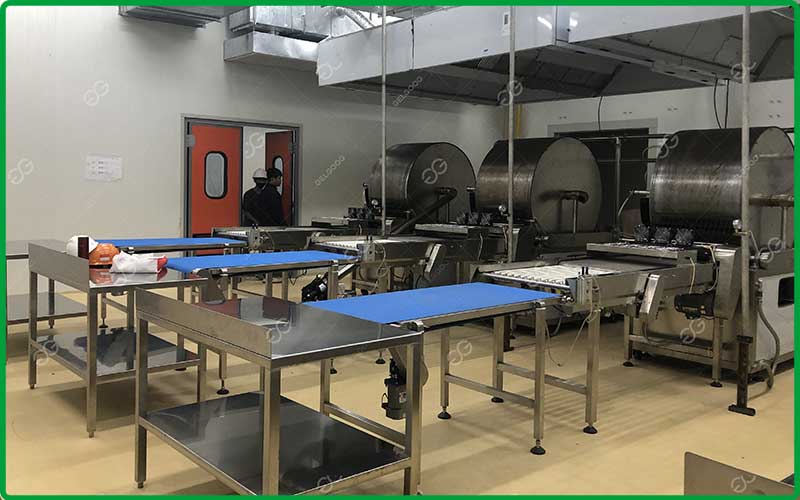
- Location & Facilities: Choose a location with logistical advantages. Design or renovate a facility that meets strict food production sanitation standards, including dedicated processing areas, cold storage, and efficient workflows.
Industrial Spring Roll Production Line
- Manual production simply cannot meet the needs of a profitable spring roll factory targeting wholesale volume. A professional industrial-grade spring roll machine is your most critical investment.
- High-capacity automated spring roll lines: These are powerful solutions for larger plants. They integrate:
- Automated filling and wrapping machines: Precisely deposit filling onto wrappers and fold/roll spring rolls at rates of thousands per hour.
- Industrial rollers/crimping machines: Provide a secure seal for frying or freezing.
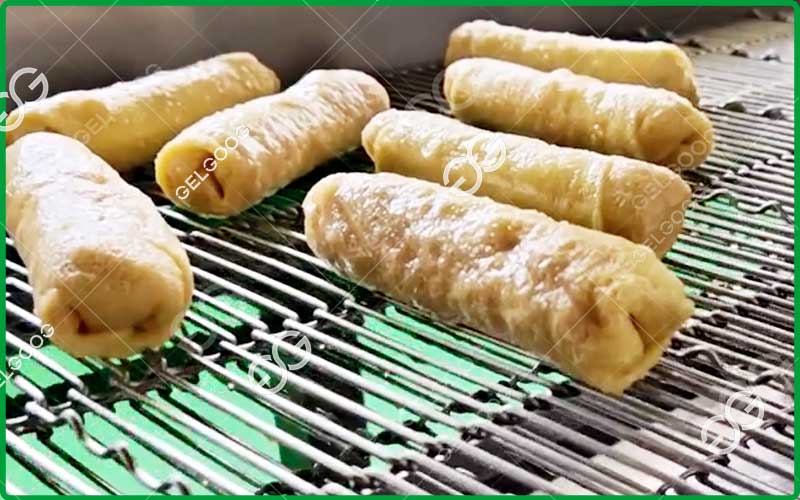
- Automated fryers (optional): For pre-fried products, large continuous fryers ensure even heating and grease management.
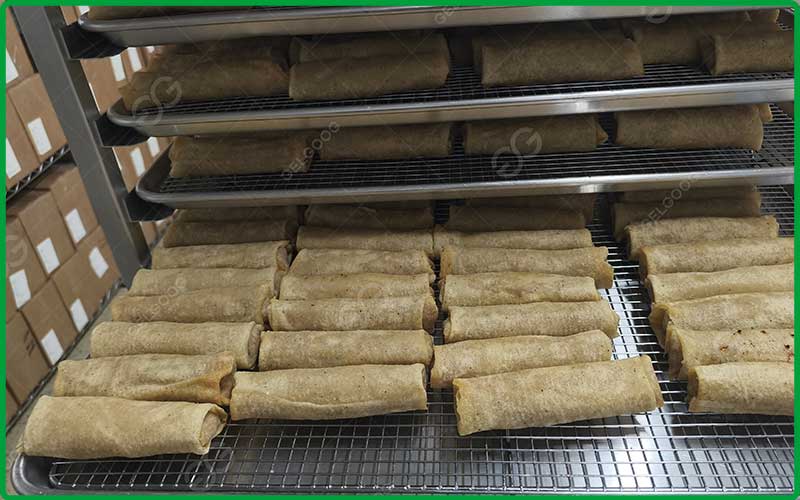
- Cooling tunnels: Rapidly cool fried spring rolls before freezing.
- Automated weighing and packaging systems: Efficiently portion, weigh, and pack frozen spring rolls into cartons or bags.
- Semi-automated lines may involve some manual steps but still use core automation for filling, rolling, and potentially frying/freezing/packaging. This is a cost-effective entry point for smaller plants.
Key Considerations for Selecting Spring Roll Machinery:
- Output (kg/hour or rolls/hour): The speed of the machine should match your sales forecast and plant workflow. Is it scalable?
- Versatility: Can the line handle spring rolls of different sizes, shapes (rolls, pillows), or even other products like samosas or wontons? Reduce future reinvestment.
- Manufacturing Quality and Hygiene: Industrial stainless steel construction is a must. Easy-to-clean and hygienic design is essential for food safety and uptime.
- Integration: Make sure the different machines (fillers, wrappers, fryers, freezers, packaging machines) work together seamlessly.
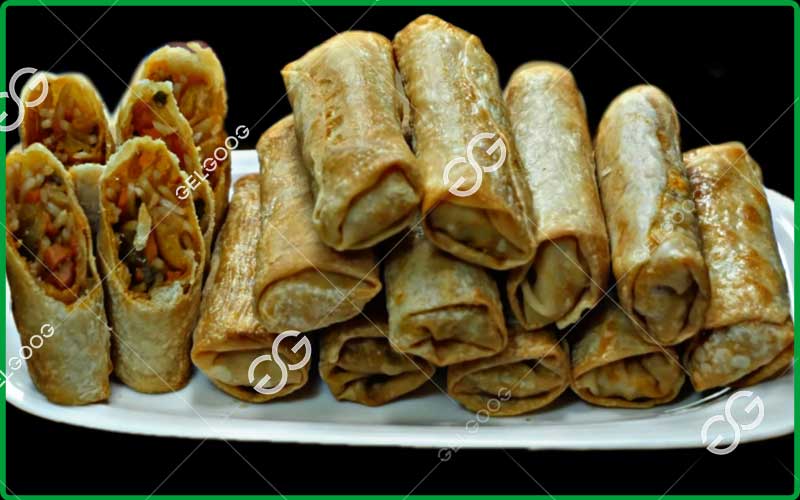
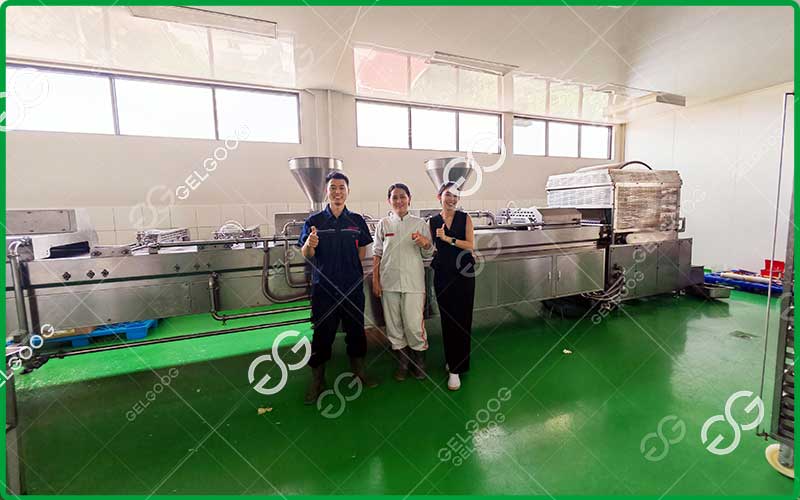
Setting Up Your Spring Roll Factory
Starting a successful spring roll business at the factory level is a daunting task, but the market potential is huge. Are you ready to automate your spring roll factory?
Leave a Reply