

Commercial Spring Roll Manufacturing Equipment Guide
Spring rolls are widely produced for restaurants, catering companies, frozen food brands, and retail markets. As demand increases, manufacturers often need more consistent pastry sheets, filling weights, product shapes, and packaging.
Commercial spring roll manufacturing equipment can automate key stages from pastry preparation and filling to wrapping, freezing, frying, and packing. The right setup depends on product specifications, production capacity, filling type, and the final market.
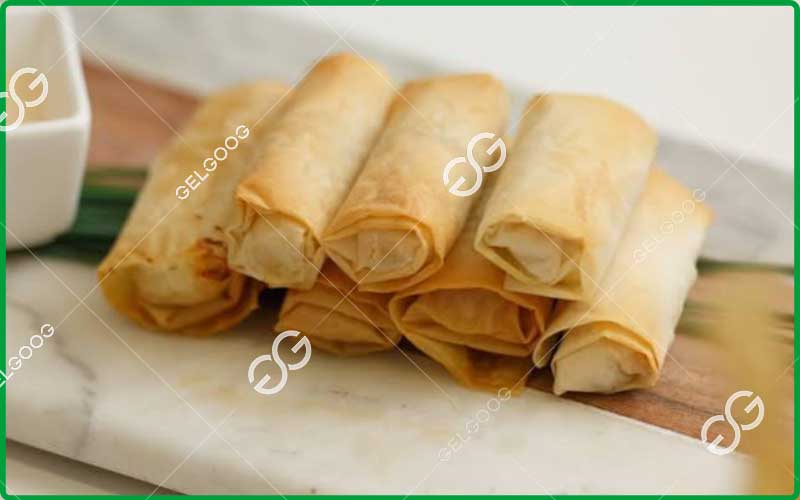
How Are Spring Rolls Made in a Factory?
A typical commercial manufacturing process follows these steps:
Batter Preparation → Pastry Sheet Making → Cooling → Filling → Folding & Rolling → Frying or Freezing → Packaging
Each stage can use dedicated equipment or connect with other machines to create a continuous production workflow.
1. Batter and Pastry Sheet Preparation
The process starts with flour, water, salt, oil, and other ingredients. A batter mixer helps maintain consistent ingredients before the mixture enters the pastry section.
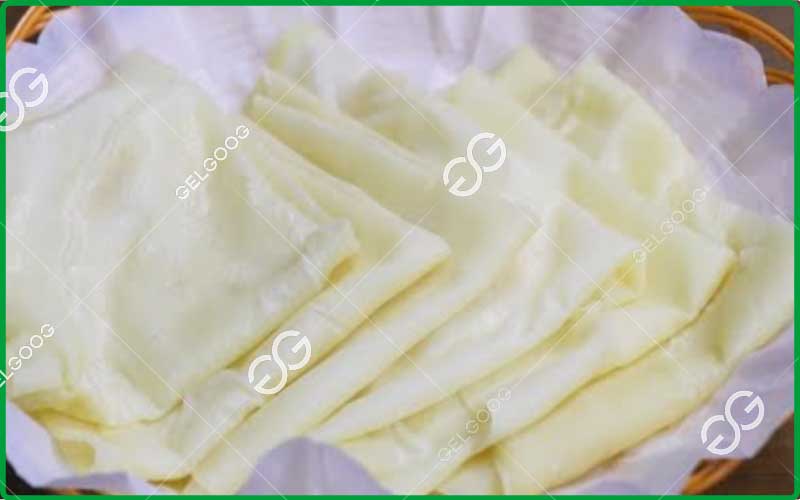
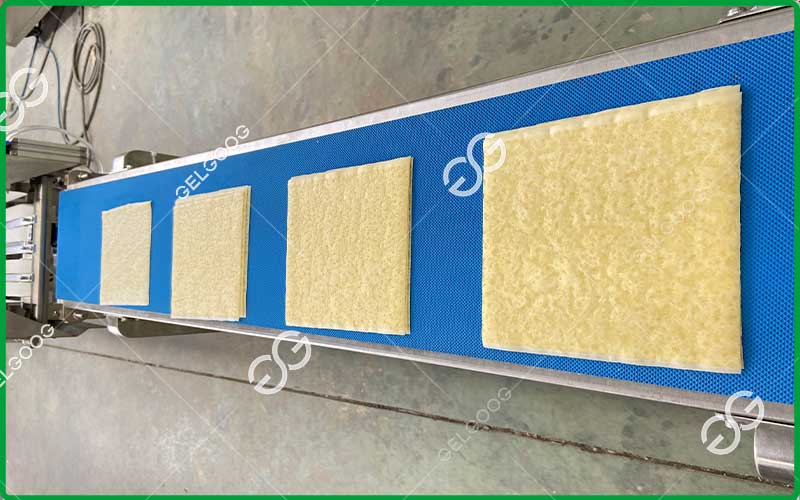
A spring roll pastry sheet machine then forms thin sheets on a heated surface. Consistent sheet thickness is important because the wrapper must remain flexible during filling and rolling.
For manufacturers producing different sizes, the equipment can be configured according to the required wrapper dimensions and thickness.

2. Filling Preparation and Dosing
Spring roll fillings may include vegetables, meat, seafood, mushrooms, or mixed ingredients.
Before filling, raw materials may be washed, cut, minced, mixed, and seasoned. A spring roll filling machine then deposits a controlled quantity of filling onto each pastry sheet.
Accurate dosing helps improve:
- Product weight consistency
- Raw material utilization
- Product appearance
- Wrapping performance
The filling equipment should match the ingredients. Vegetable pieces and minced meat, for example, have different flow and particle characteristics.
3. Automatic Folding and Wrapping
After filling, the pastry moves into the forming section.
An industrial spring roll wrapping machine folds the sides of the pastry, closes the ends, and rolls the wrapper around the filling.
The basic process is:
Filling Placement → Side Folding → End Folding → Rolling
Automatic forming helps reduce variation in product size and shape. It is particularly useful for factories supplying supermarkets, restaurant chains, foodservice companies, and frozen food distributors.
Frozen Spring Roll Manufacturing Process
Frozen spring rolls require additional processing after forming.
The typical frozen spring roll manufacturing process is:
Pastry Production → Filling → Wrapping → Quick Freezing → Packaging → Cold Storage
Quick freezing rapidly reduces product temperature and prepares the spring rolls for frozen storage and transportation.
The freezing system should be selected according to product size, weight, required output, freezing temperature, and packaging method.
For frozen food factories, the forming section can therefore connect directly with a quick freezer and packaging equipment.
Fried Spring Roll Production
Some manufacturers produce ready-to-eat or pre-fried spring rolls instead of uncooked frozen products.
The process becomes:
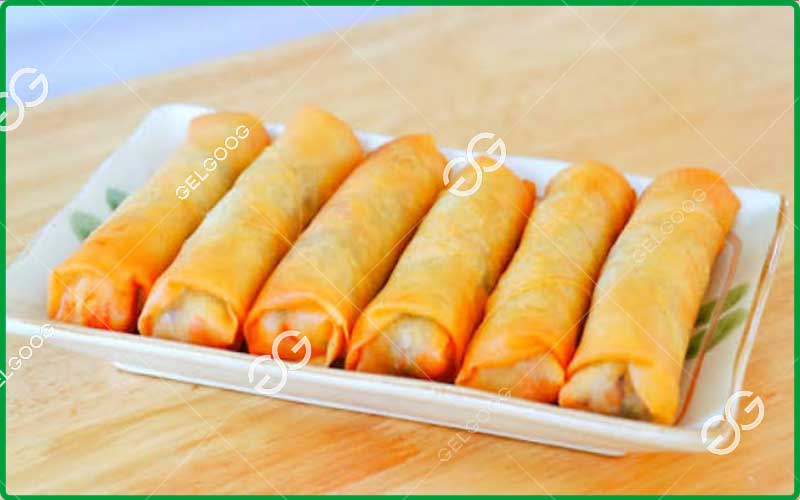
Pastry Production → Filling → Wrapping → Frying → Oil Removal → Cooling → Packaging
A continuous fryer can provide more stable frying conditions for commercial production. After frying, oil removal and cooling prepare the product for packaging.
Factories producing both frozen and fried products can design different downstream processing routes after the forming stage.
What Equipment Is Needed for Commercial Spring Roll Production?
The required equipment depends on the final product.
| Process | Equipment |
|---|---|
| Batter preparation | Batter mixer |
| Pastry production | Pastry sheet machine |
| Filling preparation | Cutter and mixer |
| Filling | Filling machine |
| Forming | Folding and wrapping machine |
| Frozen products | Quick freezer |
| Fried products | Continuous fryer |
| Final processing | Cooling and oil-removal equipment |
| Packaging | Weighing and packing machine |
A factory does not necessarily need every machine. A frozen product manufacturer may prioritize pastry production, filling, wrapping, freezing, and packaging, while a ready-to-eat producer may need frying and cooling equipment instead.
How to Choose Automatic Spring Roll Making Equipment?
Before purchasing automatic spring roll making equipment, manufacturers should confirm several basic parameters.
Production Capacity
Calculate the required hourly output from the planned daily production:
Daily output ÷ Operating hours = Required hourly capacity
This calculation helps match the capacity of the pastry, filling, forming, freezing, and packaging sections.
Product Specifications
Provide the equipment supplier with:
- Wrapper size
- Wrapper thickness
- Spring roll length
- Finished product weight
- Filling weight
- Filling ingredients
- Required pieces per hour
These specifications directly affect equipment configuration.
Final Product
Decide whether the factory will produce:
- Fresh spring rolls
- Fried spring rolls
- Frozen uncooked spring rolls
- Frozen pre-fried spring rolls
- Retail or foodservice products
The final product determines the required downstream equipment.

How Much Does Commercial Spring Roll Equipment Cost?
The cost of commercial spring roll equipment varies according to capacity, automation level, product specifications, and the number of processing stages.
A wrapper-focused machine has a different configuration from a complete frozen food system with filling, forming, quick freezing, and packaging.
Therefore, manufacturers should provide their target output and product specifications before requesting a quotation.
Spring Roll Equipment for Lumpia and Similar Products
Similar equipment may also support products such as lumpia, depending on the wrapper dimensions, filling characteristics, and forming requirements.
A commercial lumpia making machine may require different settings from standard spring rolls. Product size, wrapper thickness, filling quantity, and rolling method should be confirmed before selecting equipment.
Flexible equipment configurations can help manufacturers serve multiple product markets without completely rebuilding the processing system.
FAQ
What machine makes spring roll wrappers?
A spring roll pastry sheet machine automatically forms thin pastry sheets from prepared batter and transfers them for cooling and further processing.
Can spring rolls be made automatically?
Yes. Automatic equipment can handle pastry production, filling, folding, rolling, freezing, frying, and packaging, depending on the selected configuration.
What equipment is needed to make frozen spring rolls?
A typical frozen setup includes pastry sheet equipment, filling equipment, forming equipment, a quick freezer, and packaging equipment.
What affects spring roll machine cost?
Capacity, automation level, wrapper specifications, filling type, freezing or frying requirements, and packaging configuration all affect the final equipment cost.
Conclusion
Commercial spring roll manufacturing equipment allows food manufacturers to improve consistency and organize production around a clear processing workflow.
The best equipment configuration depends on capacity, wrapper specifications, filling type, final product, and packaging requirements. For frozen products, pastry production, filling, automatic wrapping, quick freezing, and packaging can form a complete processing route. Fried products require frying, oil removal, and cooling instead.
By defining these requirements before equipment selection, manufacturers can build a system that fits their current production needs and allows future expansion.
Leave a Reply