The Core Process of Line: Witnessing the Birth of a Spring Roll Step by Step
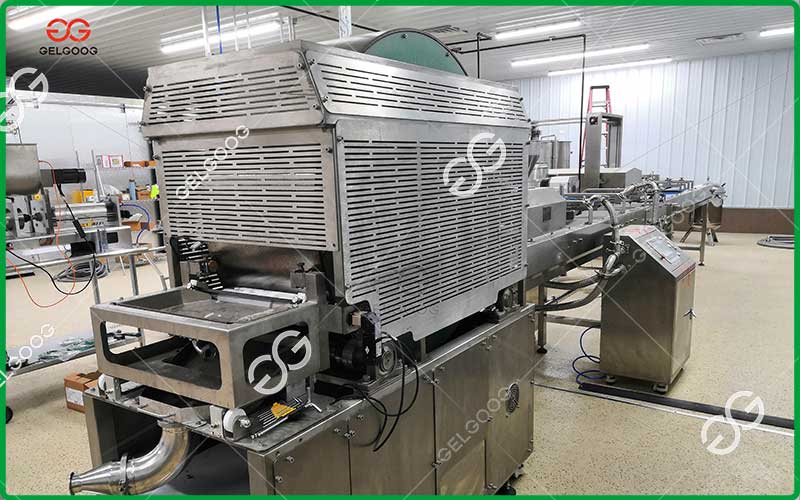
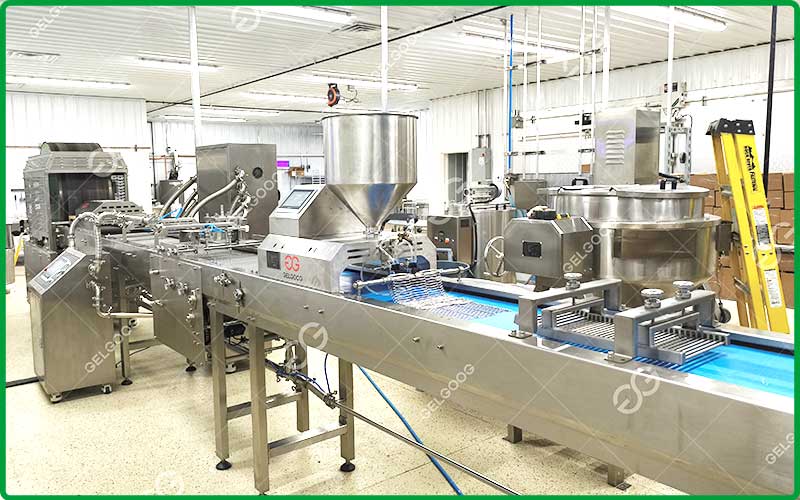
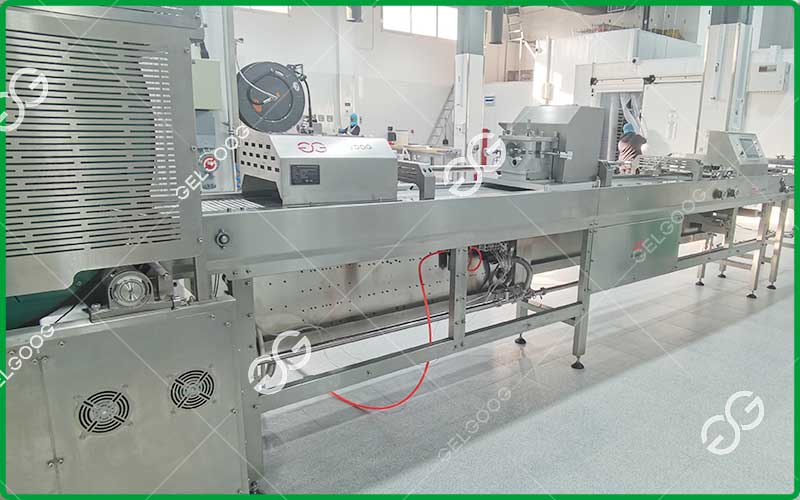
A standard fully automated spring roll production line is like a well-trained robotic orchestra, with each link working closely together to create a symphony of efficiency. Its main processes are as follows:
1. Dough Wrapper Conveying and Positioning
Process: Pre-pressed square spring roll wrappers are automatically and neatly fed into a conveyor belt. A sophisticated vision or mechanical system ensures that each wrapper is precisely positioned at its designated station, ready to be filled.
Manual Comparison: This replaces the chef's process of peeling and placing the wrappers one by one, resulting in extremely high speed and no damage.
2. Precise Filling
Process: This is the "heart" of the production line. A syringe-like filling machine accurately places a measured amount of filling (such as vegetables, meat, or red bean paste) slightly below the center of the wrapper. The amount and position of the filling are precisely calculated to ensure that the filling in each spring roll is consistent and does not overflow during rolling.
Handmade vs. Machine-Rolled: Say goodbye to relying on guesswork and using a spoon to scoop out the filling; achieve a high degree of consistency in portion size and flavor.
3. Automatic Rolling and Sealing
Process: This is the most exciting part. The machine mimics human hands, precisely completing the entire process of rolling, folding the sides, and finally sealing with batter. The entire process is seamless, ensuring the spring rolls are tightly wrapped and won't fall apart during subsequent frying or freezing.
Handmade vs. Machine-Rolled: Machine-rolled spring rolls have completely consistent shape and tightness, a model of standardized production.
4. Cutting and Collection
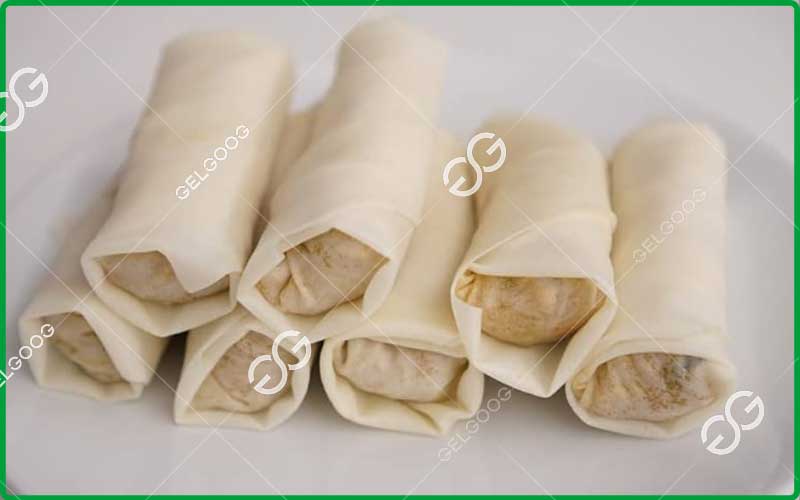
Process: The formed spring rolls are separated from the conveyor belt by a cutting device and then neatly sent to the next station via a chute or another conveyor belt.
At this point, a raw spring roll is complete! Next, they will enter different "fate" branches according to product requirements:
Subsequent Processing Branches:
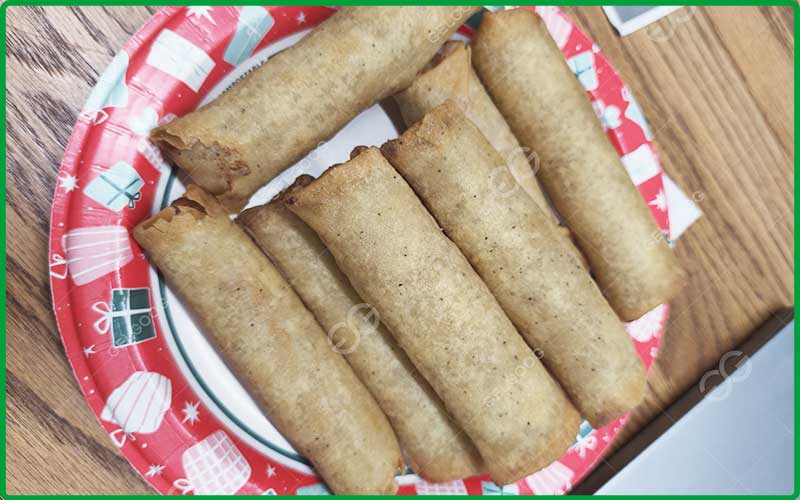
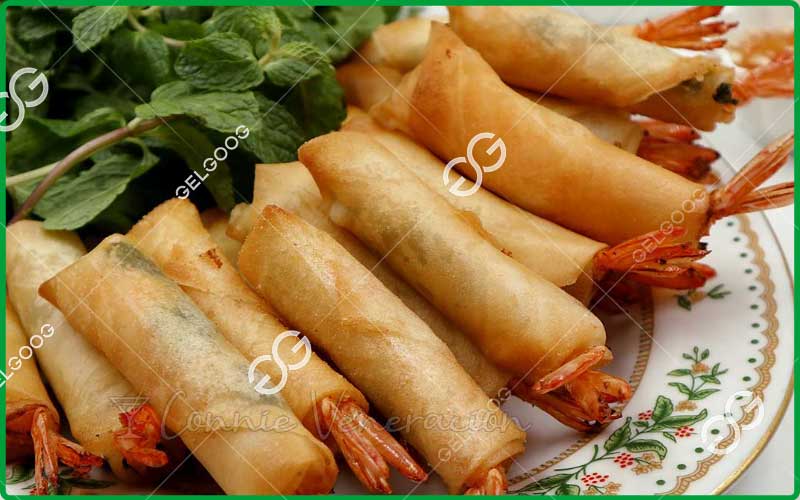
- Frying Line: The raw spring rolls enter a fryer with precisely controlled temperature and time, emerging as golden and crispy spring rolls.
- Quick-freezing line: For frozen products, raw spring rolls are rapidly passed through a quick-freezing tunnel, locking in moisture and freshness in a very short time, facilitating long-term storage and transportation.
Why choose an automated production line? Four core advantages:
- Extremely high efficiency, astonishing production capacity: A standard production line can produce 100-200 spring rolls per minute, easily exceeding hundreds of thousands per day. This is unmatched by any manual team.
- Consistent quality, stable standards: The tireless machines ensure that every spring roll is identical in weight, shape, filling ratio, and wrapping method. This is crucial for building brand reputation and consumer trust.
- Highest level of hygiene and safety: The production line is typically made of stainless steel, making it easy to clean and sterilize. It minimizes human contact with food, reducing the risk of microbial contamination and meeting the highest standards of modern food safety.
- Significantly reduced long-term costs: Although the initial investment is larger, in the long run, it greatly saves on labor and management costs and reduces raw material waste caused by inconsistent manual operations, resulting in a very high overall return on investment.
The Production Line's Versatile Applications
Don't think it can only make traditional vegetable spring rolls! By changing molds and adjusting fillings, this production line can easily transform to produce:
- Different flavored spring rolls: Vietnamese rice paper rolls, curry puffs, Mexican burritos (specific types)
- Different fillings: red bean paste, fruit, cheese, seafood, etc.
- Different sizes: From bite-sized snack rolls to large family packs, all can be customized.
Conclusion
The fully automated spring roll production line is more than just a cold, impersonal machine; it's a perfect blend of intelligence, engineering, and food science. It liberates chefs from tedious, repetitive labor, allowing us to enjoy this classic cross-cultural delicacy in a safer and more economical way.
Next time you savor a crispy, delicious spring roll at your table, perhaps you can imagine what a wonderful automated journey it may have undergone.
Leave a Reply