
What Kind of Wrapper Is Used for Spring Rolls? | Guide
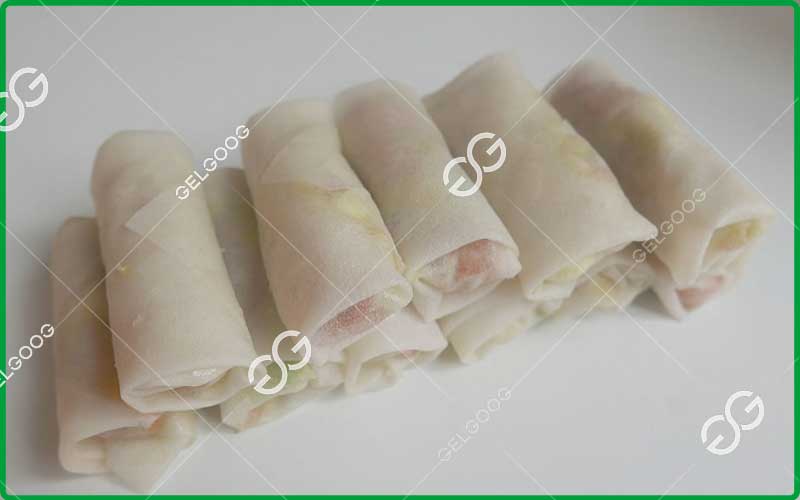
What kind of wrapper is used for spring rolls? Spring rolls are traditionally made with a thin, square wrapper made from a flour-based batter. The wrapper is designed to be thin, flexible, and strong enough to hold fillings such as vegetables, meat, seafood, or noodles without tearing during folding and rolling.
For commercial food production, manufacturers typically use a spring roll wrapper made from wheat flour, water, salt, and sometimes oil or other functional ingredients. The exact recipe varies by region and product requirements. A properly made wrapper should have a uniform thickness, smooth surface, good flexibility, and enough strength for high-speed filling and rolling.
For factories producing spring roll wrappers at scale, an automated spring roll wrapper making machine can continuously prepare thin sheets with consistent dimensions and thickness.
What Is a Spring Roll Wrapper Made Of?
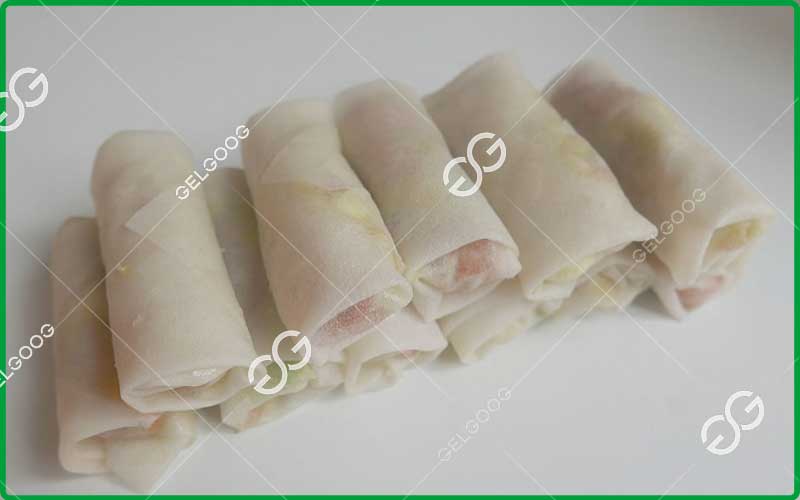
The most common spring roll wrapper ingredients include:
-
Wheat flour
-
Water
-
Salt
-
Cooking oil, depending on the formulation
-
Optional starches or other ingredients for specific texture requirements
The flour and water form the basic structure of the wrapper. Salt can improve flavor and dough characteristics, while oil may be added to achieve specific texture or processing properties.
Unlike thick pastry dough, spring roll wrapper batter is formulated to produce a very thin sheet. This allows the wrapper to become crisp after frying while still providing enough flexibility for filling and folding.
Is a Spring Roll Wrapper the Same as a Wonton Wrapper?
No. Although both are thin Asian food wrappers, their formulation, thickness, shape, and applications can differ.
A spring roll wrapper is generally a larger, thin sheet designed for wrapping spring rolls. Wonton wrappers are usually smaller and may have a different dough formulation. Spring roll wrappers are also commonly associated with a crisp texture after frying.
The exact wrapper specification depends on the final product, filling, frying method, and target market.
What Is the Best Wrapper for Spring Rolls?
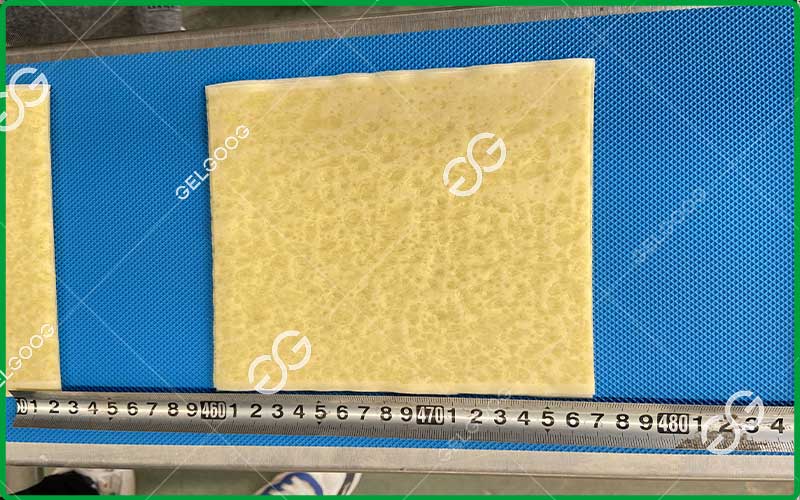
For commercial production, the best spring roll wrapper should combine thinness, flexibility, strength, and uniformity.
A high-quality wrapper should:
-
Maintain consistent thickness across the entire sheet.
-
Resist tearing during filling and folding.
-
Have a smooth and uniform surface.
-
Hold the filling securely.
-
Produce a desirable crisp texture after frying.
-
Maintain consistent size for automated processing.
For industrial manufacturers, consistency is particularly important. Variations in wrapper thickness can affect filling, folding, frying time, oil absorption, and final product quality.
How Are Spring Roll Wrappers Made?
Traditional production may involve manually spreading batter onto a heated surface. However, this method can create variations in wrapper thickness and production speed.
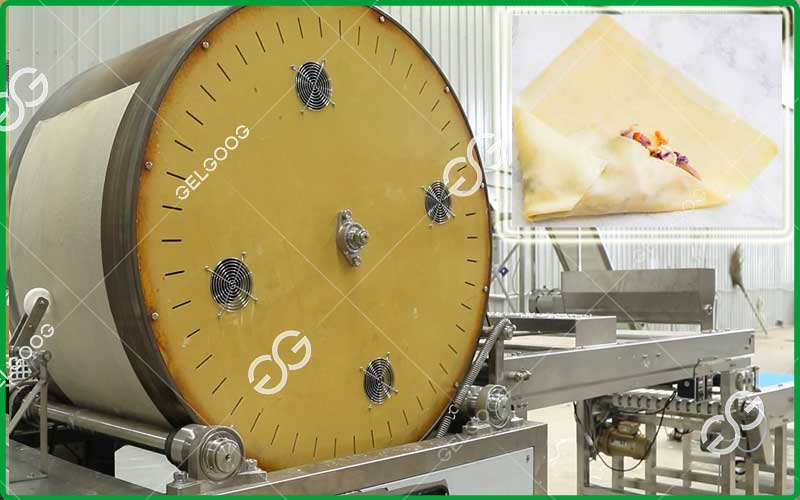
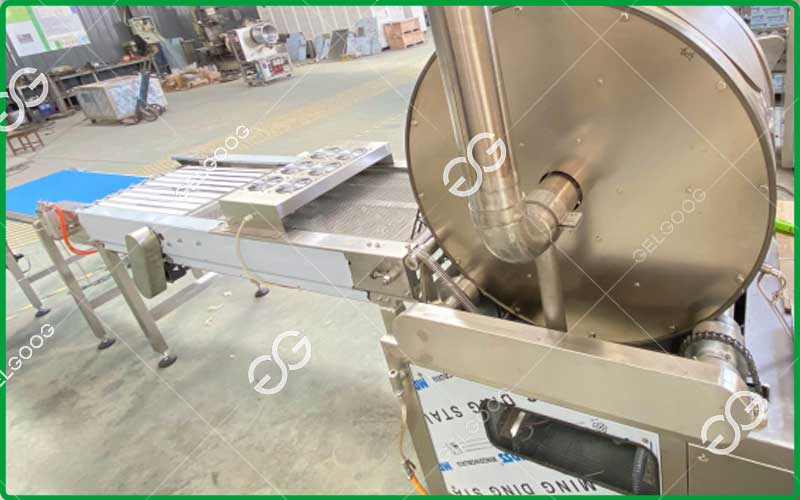
A modern automatic spring roll wrapper machine automates the main forming process. The batter is prepared and delivered to a heated baking drum or wheel, where it forms a thin sheet. The wrapper is then separated, cooled, cut, and stacked for further processing.
A typical industrial process includes:
Flour and water mixing → Batter preparation → Batter feeding → Heating and forming → Wrapper separation → Cooling → Cutting → Stacking → Packaging
The continuous production method helps food manufacturers produce large quantities of wrappers with more consistent size and thickness. Industrial machines can also be configured for different wrapper dimensions and production capacities.
What Thickness Should a Spring Roll Wrapper Be?
There is no single thickness that works for every spring roll product. The ideal specification depends on the wrapper size, filling, folding method, and cooking process.
Industrial spring roll wrapper machines can provide adjustable thickness to meet different product requirements. For example, the machines offered by Spring Roll Machinery support wrapper thickness adjustment within approximately 0.3–2.0 mm, depending on the machine model and configuration.
For manufacturers, adjustable thickness is useful because one production system can potentially serve different wrapper specifications and product applications.
How to Make Spring Roll Wrappers for Commercial Production
For a small kitchen, spring roll wrappers can be prepared manually. However, commercial production requires better control of batter consistency, heating, forming, cooling, cutting, and stacking.
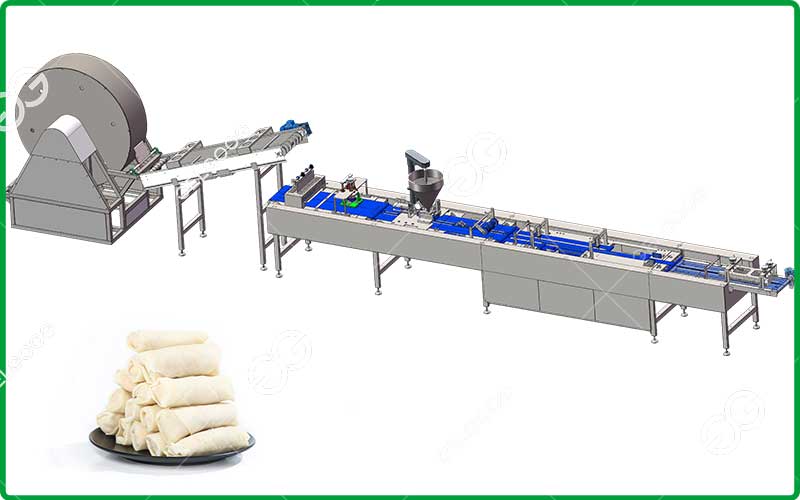
A commercial spring roll wrapper production line normally integrates several stages:
1. Batter Preparation
Flour, water, salt, and other selected ingredients are mixed to create a uniform batter.
2. Batter Feeding
A controlled feeding system transfers the batter to the forming section at a consistent rate.
3. Heating and Forming
The batter is evenly applied to a heated baking surface. Controlled temperature and movement form the batter into a thin wrapper.
4. Cooling
The freshly formed wrapper passes through a cooling section to stabilize its texture and prevent sticking.
5. Cutting and Stacking
The wrapper is cut into the required square or other shape and then stacked for packaging or subsequent spring roll production.
This automated process reduces repetitive manual work and improves production consistency. Complete wrapper production lines can also integrate mixing, cooling, cutting, packaging, freezing, or other downstream equipment according to factory requirements.
Spring Roll Wrapper Machine for Industrial Production
For factories looking to produce spring roll wrappers commercially, the Continuous Spring Roll Wrapper Making Machine is designed for continuous automated wrapper production.
The equipment can produce spring roll wrappers as well as related thin-sheet products such as lumpia wrappers, crepes, and pancakes. Depending on the model, listed capacities range from approximately 1,000 to 7,000 pieces per hour, with adjustable wrapper thickness and dimensions.
For larger projects, manufacturers can also combine the wrapper machine with batter mixers, cooling systems, cutting equipment, packaging machines, freezers, and other processing equipment to create a complete spring roll wrapper production line.
This approach is particularly suitable for food factories, frozen food manufacturers, catering suppliers, and businesses supplying spring roll wrappers to restaurants and distributors.
Frequently Asked Questions About Spring Roll Wrappers
What kind of wrapper is used for spring rolls?
A spring roll normally uses a thin flour-based wrapper made primarily from wheat flour and water, with salt and other ingredients added according to the recipe.
Are spring roll wrappers made from rice?
Some Asian-style wrappers are made from rice flour, but they are different from the typical wheat-flour spring roll wrapper used for many fried spring rolls. The formulation depends on the regional product and desired texture.
Can spring roll wrappers be made by machine?
Yes. An automatic spring roll wrapper machine can continuously form, bake, cool, cut, and stack thin wrappers, making it suitable for commercial and industrial production.
What is the difference between a spring roll wrapper and lumpia wrapper?
The terms can describe similar thin wrappers, but specifications vary by region. Lumpia wrappers are commonly associated with Filipino spring rolls, while spring roll wrappers are widely used across Asian cuisines. Commercial equipment can be configured for different wrapper sizes and formulations.
Can one machine make different types of wrappers?
Yes. Depending on the configuration, a spring roll wrapper machine can also be used for products such as lumpia wrappers, crepes, pancakes, and other thin sheets.
Conclusion
A spring roll wrapper is a thin, flexible sheet most commonly produced from a flour-based batter. Its quality directly affects filling, folding, frying, texture, and the appearance of the finished spring roll.
For commercial manufacturers, automated production offers better control over wrapper thickness, size, output, and product consistency. A properly configured spring roll wrapper making machine can therefore provide an efficient solution for factories that need reliable high-volume wrapper production.
If you are planning a commercial spring roll wrapper project, production capacity, wrapper size, thickness, recipe, and downstream processing should all be considered when selecting the equipment.
Leave a Reply